
Well, it’s Monday and I’m not sure when this is going out.
Standby, let me check…
Okay, this is Thursday’s episode…which is bad, because as busy as this week is I may not have much time to do a complete one, so let’s jump right into it, shall we?

I mean … I really don’t have much of a personal nature to say, anyway, other than a HUGE thank you to Alan F for the donation! We’re not calling it late since it was mailed all the way from the Netherlands…although I’m gonna have to find someplace to convert Euros to dollars in this little bitty town of mine.
But it’s all good. Thank you Alan! Last year I sold it to my deputy who was on his way to that part of the world and it worked out great. Sadly, right now, he’s already IN that part of the world and is not likely to come back for a time. Poor guy has been gone more than he’s been home. Pray for him and for all of our men and women who are there right now.

Yes, I know it’s a little spicey on the language, but it is also VERY TRUE!
Yup!


Just one thing?
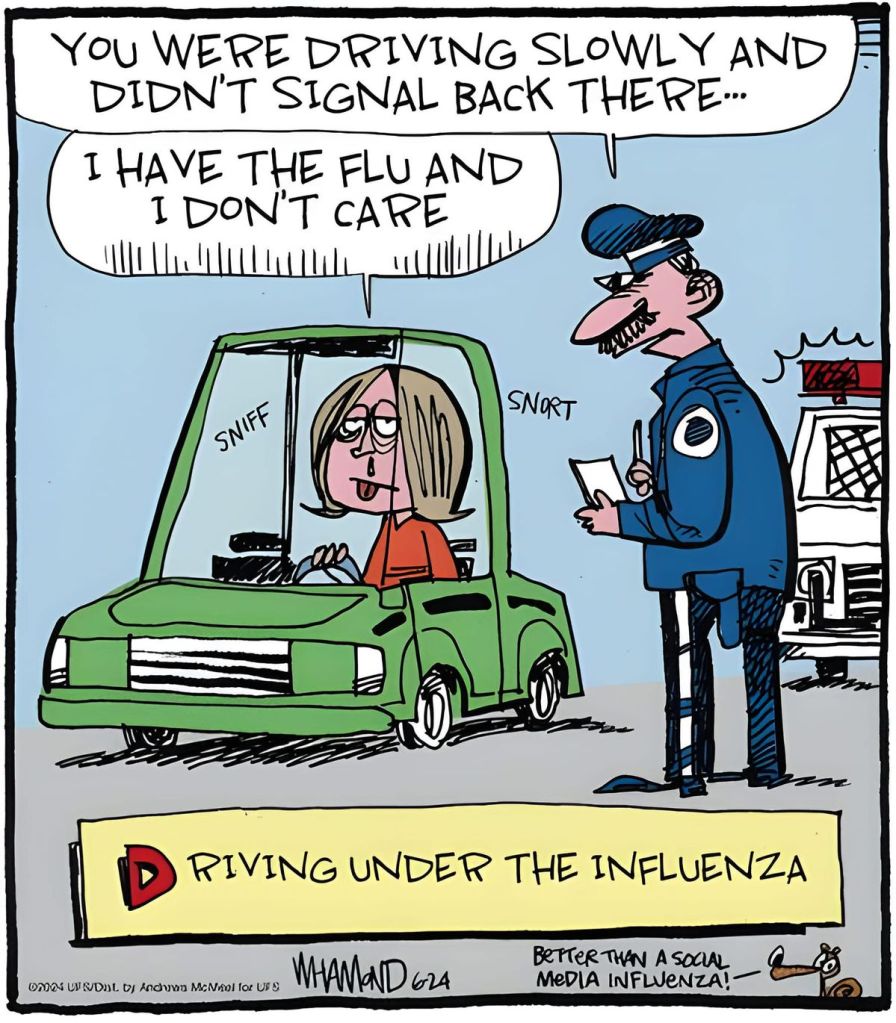
Snort speed.



And His pronouns are always capitalized.



The Moore family was proud of their family tradition. Their ancestors had come to America on the Mayflower.
Their line had included senators, pastors, and Wall Street wizards, and a few major league baseball players and Army generals. They decided to compile a family history, a legacy for the children.
They hired a fine author. Only one problem arose: how to handle that great-uncle who was executed in the electric chair.
But the author said not to worry, he could handle that section of history tactfully.
When the book appeared, the family turned to the section on Uncle George.
There, they read, “George Moore occupied a chair of applied electronics at an important government institution and was attached to his position by the strongest of ties.
His death came as a real shock.”
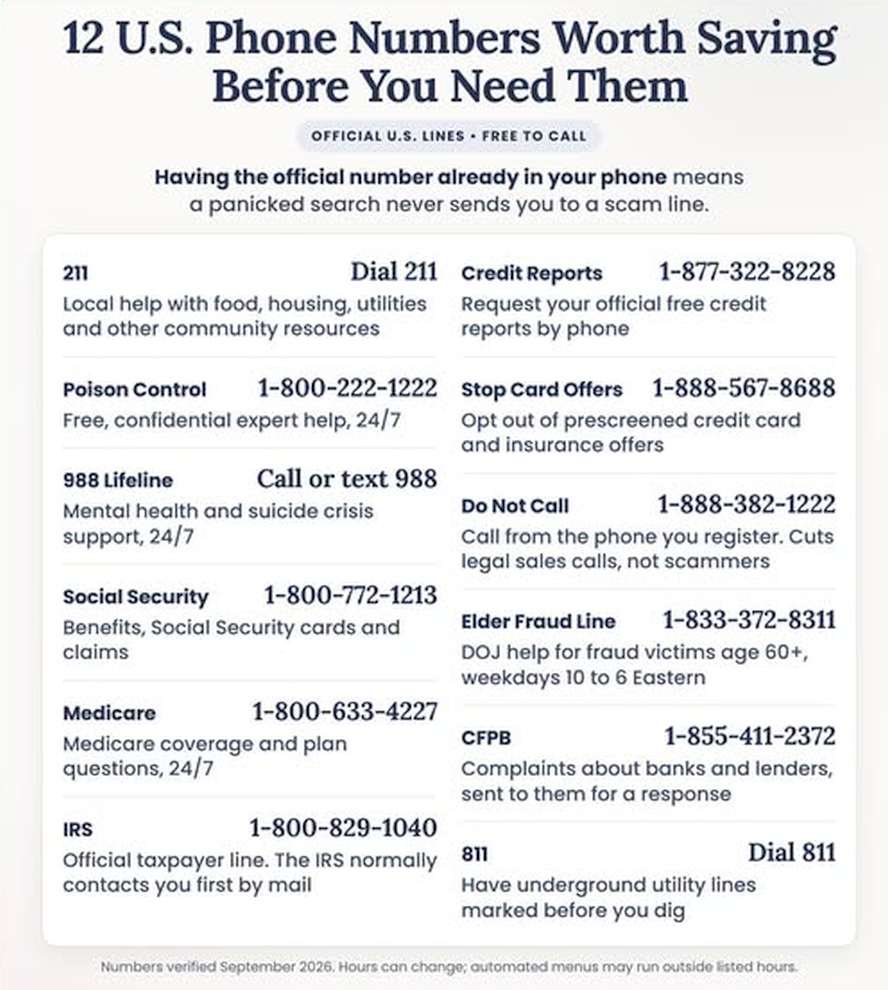
Worth writing down!
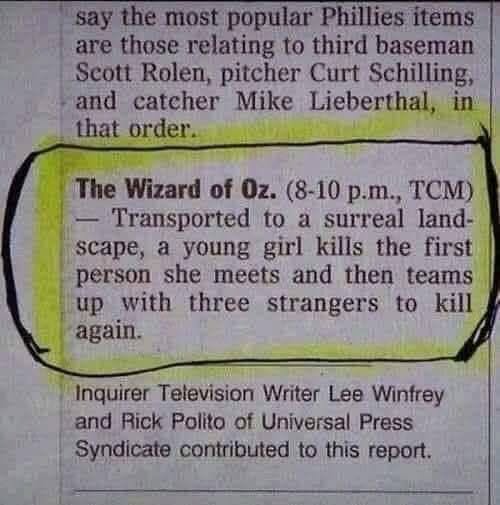
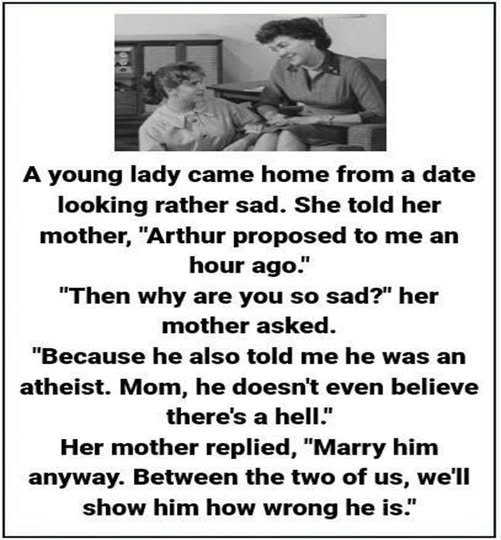

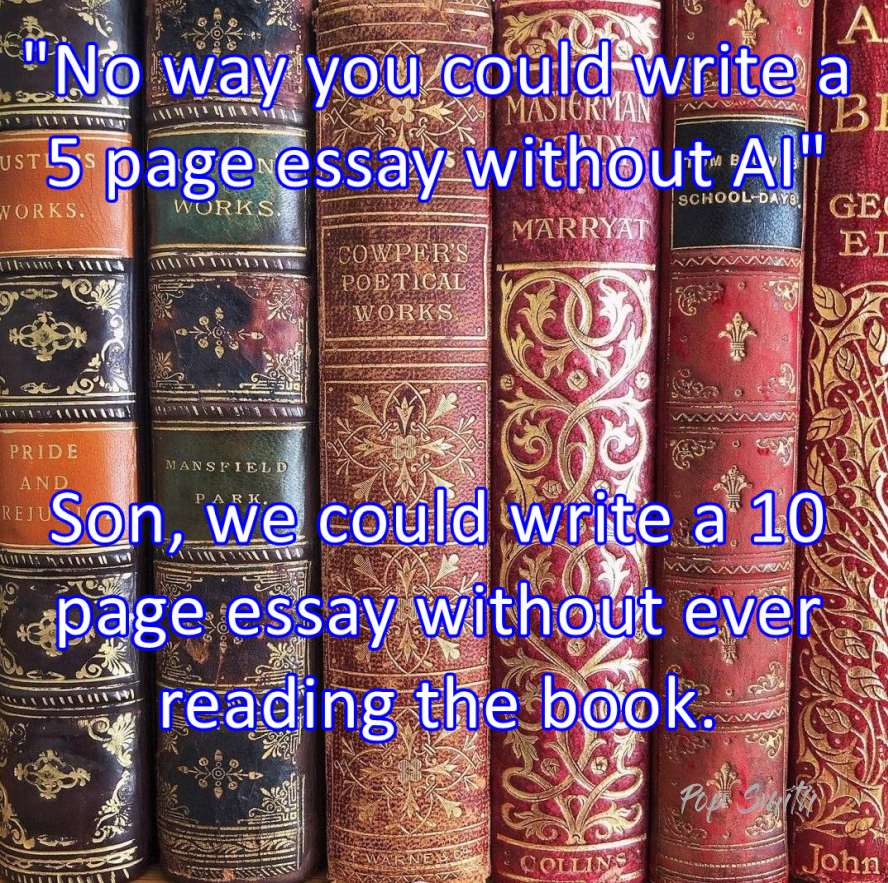
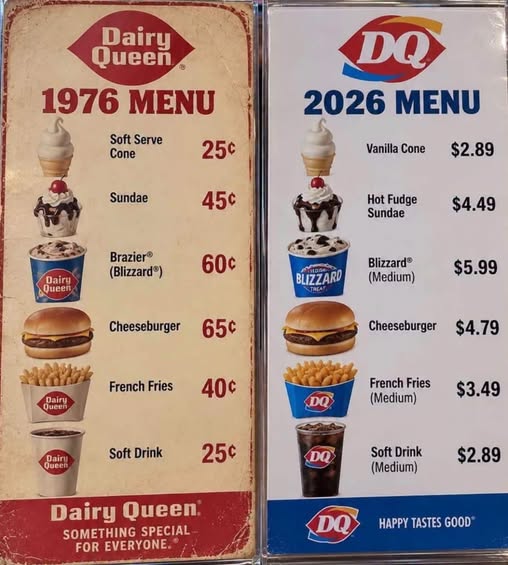

Oh so very true!

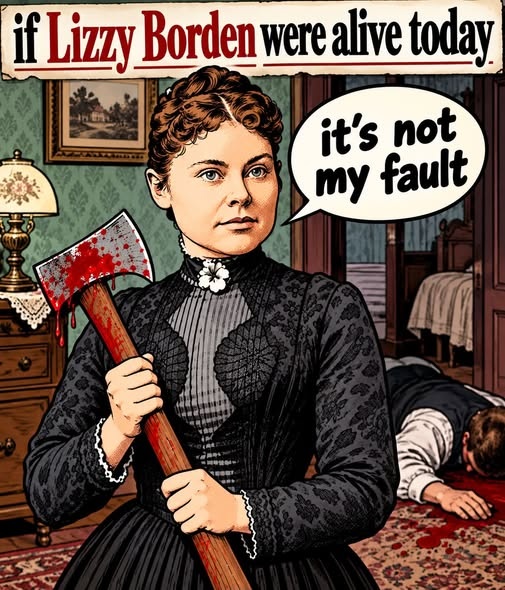
If the African yak spins in circles till it gets dizzy, is that called an afro-dizzy-yak?
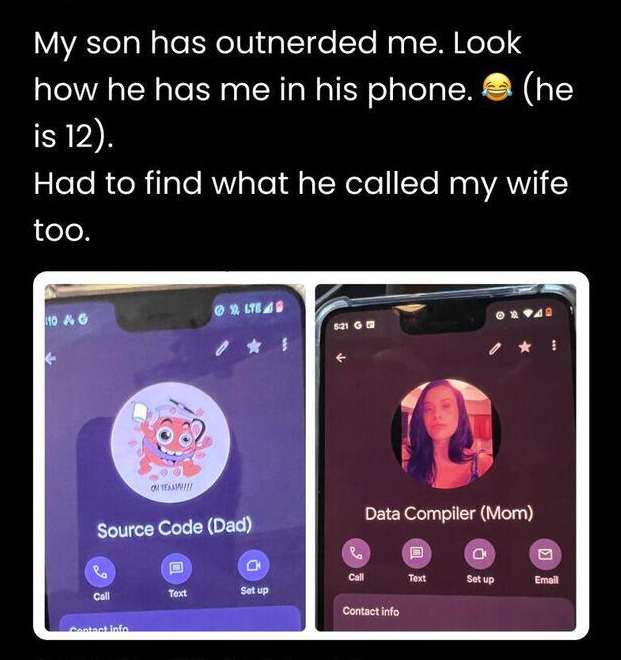

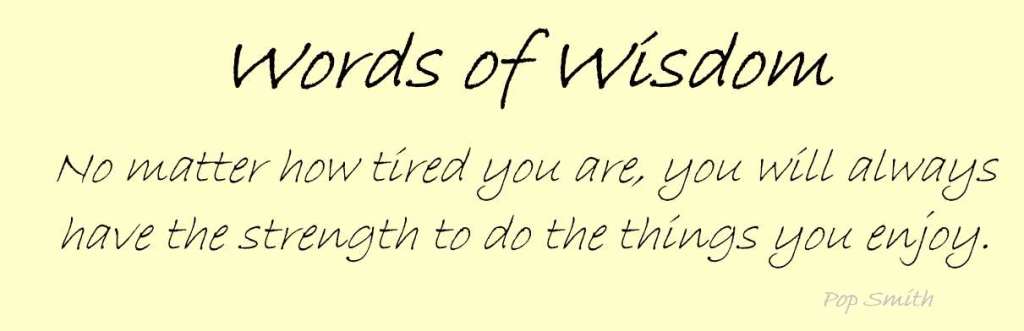






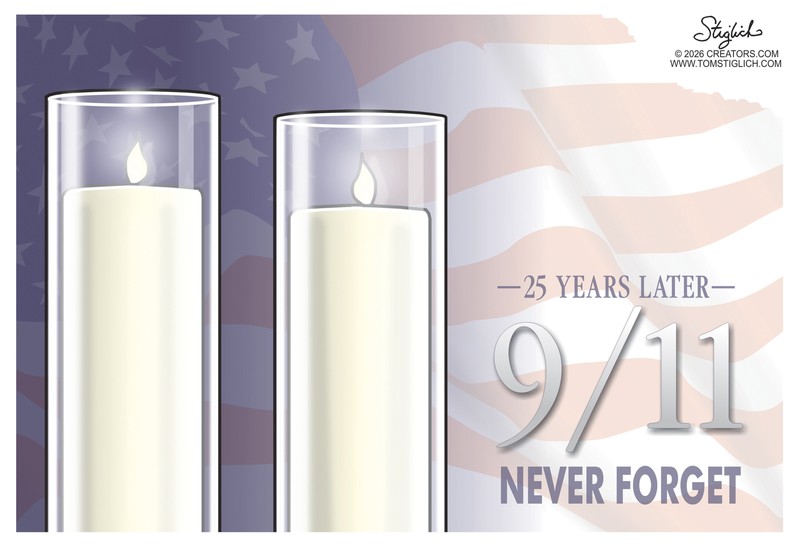
Okay, right here is the PERFECT place to post this next piece sent in by Lynn.
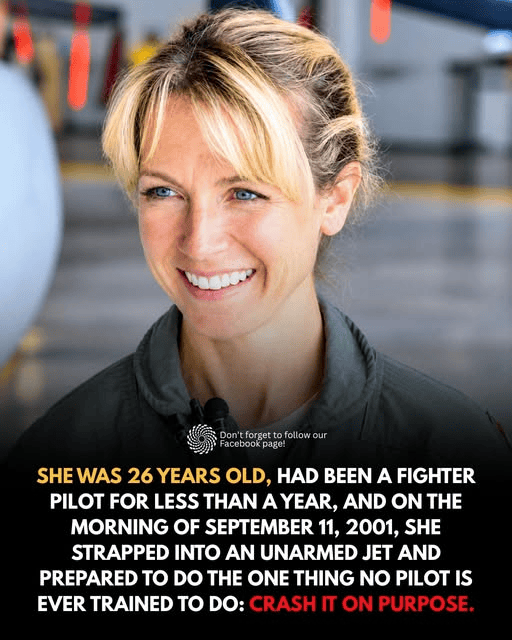
And now hear the rest of the story…
A few years earlier, Heather Penney had been planning to become an English teacher.
She’d grown up around aviation — her father, John Penney, was a retired Air Force colonel who’d flown combat missions in Vietnam and had gone on to become a commercial pilot for United Airlines. But when Heather enrolled at Purdue University, women still weren’t allowed to fly in combat, so she majored in literature instead, aiming for a classroom, not a cockpit.
Then, while she was in graduate school, Congress opened combat aviation to women. Penney signed up almost immediately. She was accepted into the District of Columbia Air National Guard’s 121st Fighter Squadron, becoming the only woman in her entire training class — and the first female fighter pilot her unit had ever had.
By January 2001, she was flying F-16s out of Andrews Air Force Base. She’d been on the job for barely eight months when the sky over Washington fell apart.
That Tuesday morning started as an ordinary training briefing. Then someone leaned into the room with news that a plane had hit the World Trade Center. Before anyone could fully process it, a second tower was hit. Then the Pentagon, just a few miles from where Penney stood, was struck by a third hijacked airliner.
Her commander, Col. Marc Sasseville, found her in the chaos. There was a fourth hijacked plane — United Airlines Flight 93 — and it was believed to be heading for Washington, D.C. Sasseville and Penney needed to get airborne immediately.
There was no time for the missiles. Arming an F-16 properly could take the better part of an hour, and Flight 93 didn’t leave them an hour. So the two pilots ran to their jets anyway, climbed into cockpits carrying no real weapons, and took off regardless.
If they found the airliner, there would be only one way to stop it. Sasseville told Penney he’d aim for the cockpit, hoping to destroy the terrorists at the controls. Penney would go for the tail, aiming to knock the plane off balance and send it down before it could reach its target. Both pilots understood they likely wouldn’t survive the impact, and both went anyway.
What makes the story even harder to sit with is a detail that rarely makes it into retellings: Penney’s own father was, at that very moment, flying commercial routes for the same airline as the hijacked jet she was prepared to destroy.
Penney and Sasseville spent the next stretch of time scanning the sky over a smoking Pentagon, searching for an airliner they hoped never to find. They never did. Over a field near Shanksville, Pennsylvania, the passengers and crew of Flight 93 had already learned what was happening in New York and Washington. They fought back against the hijackers, and the plane went down in that field instead of reaching the Capitol or the White House.
Penney and Sasseville spent the rest of that day flying patrols over an eerily empty Washington airspace, still not knowing, for hours, that the mission they’d braced to die for was already over.
Penney went on to serve eighteen years in the Air National Guard, deploying twice to Iraq — including missions hunting Scud missile launchers at night in the western desert. She eventually left fighter jets to fly VIP transport missions, retired as a Major, and now works as a defense policy researcher in Washington. Marc Sasseville stayed in uniform even longer, eventually rising to lieutenant general and serving as vice chief of the National Guard Bureau.
For years, Penney rarely spoke publicly about that morning. When she finally did, she was careful to redirect the credit. The passengers of Flight 93, she has said, are the real heroes of that story — the ones who didn’t have years of training or a chain of command telling them what to do, and who acted anyway.
But her own morning matters too, for what it says about courage that never gets tested in the way it expects to be. Penney didn’t get a chance to prove she would have gone through with it. She got in the jet, made her peace with what was being asked of her, and flew toward the unknown without waiting to see if there was a safer option. Sometimes that’s the whole of what courage is — not the outcome, but the decision made before anyone knows how the story ends.




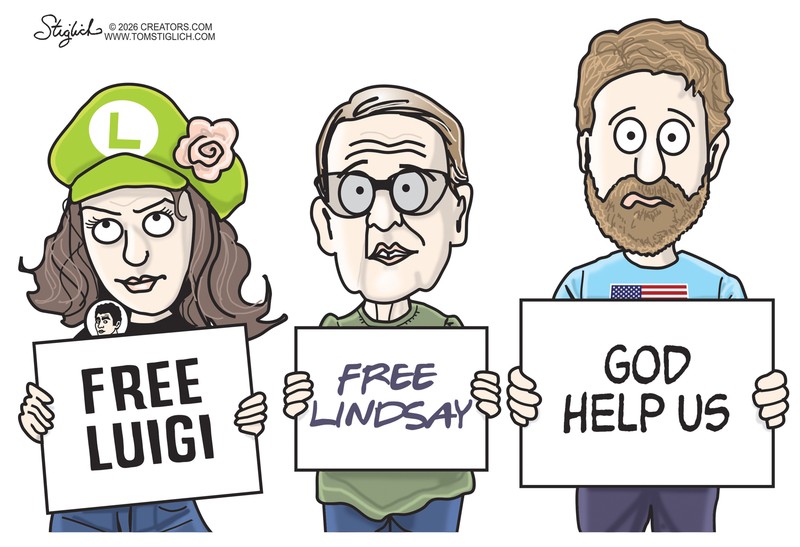
My neighbor bragged to me that her son is a genius.
His teacher said to him,
“I can’t teach you anything.”





Michigan Laws
A state law stipulates that a woman’s hair legally belongs to her husband.




THE doctor purses his lips, looks at you pityingly over his half-moon spectacles and quietly writes something on his clipboard, something short, sharp and authoritative.
He turns away to answer the phone and you seize the diversion to sneak a look at your case notes. He has written: “Plumbum oscillans.”
What disease can this be? It sounds contagious… maybe even fatal… Is it time to phone friends and family and say farewell? Is your will up to date?
Relax.
Plumbum oscillans is no threat to health – it is Latin for “swinging the lead,” and it is the doctor’s discreet way of concluding that you are a malingerer, someone seeking a sick note to take time off work.
These and other terms are part of a secret language, indecipherable to outsiders, that doctors use with each other to convey a truth that is otherwise unsay-able, especially to the patient.
The slang can be cruel, insulting and highly inventive, says Adam Fox, a specialist registrar at the Child Allergy Unit at St. Mary’s Hospital in London, who has put together a dictionary of the terms.
They include British emergency-room acronyms such as UBI (for “Unexplained Beer Injury”), PAFO (“Pissed And Fell Over”) and ATFO (“Asked To F… Off”), not to mention Code Brown, referring to a faecal incontinence emergency.
Then there is DBI, for “Dirtbag Index.” This is a formula which multiplies the number of tattoos on the patient’s body by the number of missing teeth to estimate the total of days he has gone without a bath.
Relatives of patients on the critical list may blanche if they knew what CTD, GPO or Rule of Five mean on their loved-one’s records.
The first means “Circling The Drain,” the second signifies “Good for Parts Only” and “Rule of Five” means that if more than five of the patient’s orifices are obscured by tubing, he has no chance.
A patient who is “giving the O-sign” is very sick, lying with his mouth open. This is followed by the “Q-sign” — when the tongue hangs out of the mouth — when the patient becomes terminal.
General practitioners may use LOBNH (“Lights On But Nobody Home”) or the impressively bogus Oligoneuronal to mean someone who is thick.
But they also have a somewhat poetic option: “Pumpkin positive”, referring to the idea that the person’s brain is so tiny that a penlight shone into his mouth will make his empty head gleam like a Halloween pumpkin.
If a doctor is stumped for what is wrong with his or her patient, they may record GOK, for “God Only Knows.”
As for genetic quirks or inbreeding, FLK means “Funny Looking Kid” and NFN signifies “Normal For Norfolk,” a rural English county.
Fox says he has a list of more than 200 terms used by medical practitioners in Britain but his collection shows that doctors around the world make up their own versions.
In Brazil, for instance, physicians use the acronym PIMBA for what can be translated as “swollen-footed, drunk, run-over beggar.”
Fox agrees that some terms are offensive and even cause confusion to other doctors who are not in the know.
But he asks at least for critics to understand the stress that doctors face every day. And in any case, the colourful language is under threat of dying out because of fears of lawsuits.
“The use of medical slang helps to depersonalise the distress encountered in doctors’ everyway working lives,” Fox told the British Medical Journal (BMJ) last year.
“It is a way of detaching and distancing oneself from patients’ distress through loss, grief, disease, dying and death. Often someone else’s pain is too much for us, so we cut up…”






He has all the virtues I dislike and none of the vices I admire.
– Sir Winston Churchill (1874-1965)





And that’s it! We did it. I’m gonna be missing a lot of sleep and this is not quite as long as usual, but we still did it. Until next time my loved ones!




 Dragon Laffs
Loved the “no training needed……” comment on the hammer!!!! Classic!!