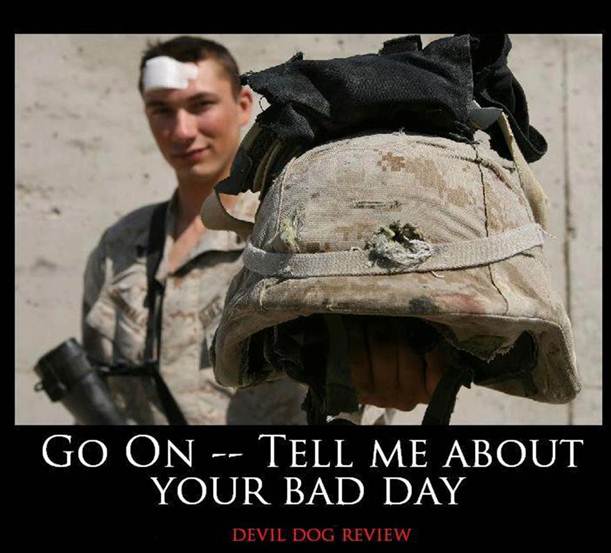



Today is June 6th, the 82nd anniversary of D-Day, the Normandy Invasion, Operation Overlord during World War II. The largest sea invasion in history, it was designed to liberate France and then move on to the rest of western Europe. At least 10,000 allied casualties and 4,414 confirmed dead. Much blood is given to defend and protect those who can’t.
“Greater love has no one than this, that someone lay down his life for his friends.” (John 15:13)

Memorial Day was just the other day and I think there is a reason that it occurs so close to the anniversary of D-Day. I had some late arriving Memorial Day stuff and one really excellent essay from Lynn that I want to share with you on this anniversary, so let’s get to it.


Most Veterans don’t want to be honored, we just don’t want to be treated like crap and treated like we don’t know what we’re talking about.

Keep in mind that the following was originally written for Memorial Day, but I didn’t get it in time.
As someone who has stood on the shores of Normandy, there is NOTHING “happy” about this weekend. 1964. Twenty years after D-Day. Eisenhower returned to Normandy beaches where he’d sent thousands of young men to die. CBS filmed him walking Omaha Beach. No speeches. No celebration. Just an old general remembering the boys who never came home. In April 1964, nearly two decades after the largest amphibious invasion in military history, former President and Supreme Allied Commander Dwight D. Eisenhower walked back onto the beaches of Normandy—the beaches where he had once sent thousands of young men into history’s deadliest storm.

CBS News cameras followed him for a special documentary episode titled D-Day Plus 20 Years: Eisenhower Returns to Normandy. The network filmed the 73-year-old Eisenhower as he revisited Omaha Beach, Utah Beach, and the invasion sites he’d studied obsessively on maps twenty years earlier, places he’d seen only in after-action photographs and casualty reports.
But this was not a victory tour. Not a celebration of military triumph. Not a general basking in past glory or a former president seeking attention. It was something far more profound and painful: a reckoning.
On June 5, 1944, the night before D-Day, General Dwight D. Eisenhower had made what he would later describe as the most difficult decision of his entire life—more difficult than any political decision he’d make as president, more consequential than anything else he’d ever be asked to do. Launch the invasion of Nazi-occupied France across the English Channel. Or delay and risk complete disaster.
The weather was terrible—storms, high winds, dangerous seas. His meteorologists said there might be a brief window of slightly better conditions on June 6th, but it wasn’t guaranteed. Postponing meant waiting weeks for the next favorable tide and moon conditions—weeks during which German intelligence might discover the invasion plans, during which troop morale would deteriorate, during which strategic surprise would be lost.
But launching in bad weather meant higher casualties, greater risk of complete failure, possible catastrophe that could lose the war. Eisenhower understood the stakes with absolute clarity: If the invasion failed, the Allied cause in Europe could be lost. The war might continue for years. Nazi Germany might develop new weapons. The cost in lives would be incalculable.
If the invasion succeeded, thousands of Allied soldiers would still die in the first hours. The beaches would become slaughter zones. Boys barely out of high school would drown in surf or be cut down on sand before they could advance.
Success or failure—both meant extraordinary loss of life. Eisenhower signed the order to proceed anyway. Gave the command that sent 156,000 men across the Channel on June 6, 1944.
And he drafted a statement accepting full personal responsibility if the invasion failed—a message prepared in advance, never needed but kept as evidence of his willingness to bear complete blame.
On June 6, 1944, those young soldiers—many still teenagers, barely out of high school, some who’d never seen combat before—stormed the Normandy beaches under devastating German fire.
Machine guns and artillery tore through the first waves. Men drowned weighted down by equipment in water too deep to stand. Bodies fell on the sand before soldiers could reach cover. Medics worked desperately on casualties they couldn’t save.
The waves literally turned red with blood. Sand became temporary graves. Freedom—the liberation of Western Europe from Nazi occupation—was being bought with thousands of individual lives, each one someone’s son or brother or husband or father.
By the end of June 6th, Allied forces had established a foothold in France. The invasion succeeded strategically. But approximately 4,400 Allied soldiers died that day. Thousands more were wounded. The “success” was built on a foundation of extraordinary human sacrifice.
Twenty years later, in 1964, Dwight D. Eisenhower—no longer Supreme Commander, no longer President, just an aging man carrying memories—stood on those same beaches.
Older now, at 73. Quieter than he’d been as a commanding general. Physically heavier but emotionally weighed down by two decades of remembering what happened here.
There were no triumphant speeches delivered to cameras. No celebration of military victory. No self-congratulation about his role in history. Just quiet, painful reflection on what this place represented.
Eisenhower walked slowly across Omaha Beach. He looked at the bluffs where German machine gun positions had decimated the first assault waves. He stood where young men had died before taking more than a few steps onto French soil.
He remembered—as he would for the rest of his life—the letters he had written to families of soldiers killed under his command. Thousands of condolence letters, each one attempting to find words adequate to parents’ grief, each one carrying the weight of his decision to launch the invasion.
He remembered the nights before D-Day when he lay awake knowing what was coming, knowing thousands would die on his orders, knowing he bore ultimate responsibility for whatever happened.
He remembered the faces—not abstractions or statistics, but individual soldiers he’d met, talked to, encouraged before they boarded landing craft. Young men who’d looked to him for confidence, for leadership, for the assurance that what they were about to do mattered.
Some of those faces never aged beyond June 6, 1944.
Eisenhower had commanded millions of soldiers during World War II. He’d made countless strategic decisions affecting entire nations. He’d become President of the United States and shaped Cold War policy. But he never forgot the individuals. Never reduced the human cost to acceptable statistics or necessary sacrifices. Never stopped feeling the weight of those deaths.
This 1964 visit to Normandy was not about his power or historical importance or military genius.
It was about responsibility—about a commander returning to the place where he had asked absolutely everything from others, where he had sent thousands to almost certain death because strategic necessity demanded it.
And where he would spend the rest of his life knowing the full cost of that decision.
Standing on those beaches in 1964, Eisenhower didn’t see historical monuments or tourist attractions or symbols of Allied victory. He saw sons. Eighteen-year-olds who should have been starting college or careers or families, who instead died in French surf or on Norman sand. He saw sacrifice measured not in grand strategic terms but in individual lives cut short, futures erased, families destroyed by telegrams beginning “We regret to inform you…”
He saw history written in blood and courage—written by young men who had trusted his judgment, followed his orders, and paid with their lives. The CBS documentary captured something raw and genuine: not a victorious general reviewing his triumph, but an old man confronting the human cost of decisions he’d made two decades earlier.
Eisenhower would die just five years later, in 1969. But until his death, he never stopped honoring those who fell on D-Day. Never stopped feeling the weight of command. Never allowed himself to forget what his orders had cost.
That 1964 walk on Normandy beaches wasn’t closure. Decisions like launching D-Day don’t allow closure.
It was witness. Remembrance. The ongoing responsibility of a commander to never forget the men who died following his orders. June 6, 1944. Thousands of young men stormed beaches defended by machine guns and artillery.
April 1964. An old general returned to where they fell. He didn’t celebrate victory. He mourned sacrifice. And remembered names, faces, letters to parents.
That’s not just leadership. That’s carrying the weight of command with honor until the very end.


So… From there, let’s move on to our regular issue, shall we? And you all KNOW that we have plenty of issues to explore in our issue.
So, the next step in my line of “What could possibly go wrong next?” is while mowing the lawn yesterday, the belt that runs the deck cutter broke. For you guys this is a week ago.
I mean, come on! Let’s see that’s:
Fence
Water Heater
Motorcycle
Air Conditioner
Lawn Mower
I thought these things were supposed to come in 3s.
Anyway, let’s get going with the fun stuff…


That one was from Lynn and I understand completely.


This was sent to us by brother Don
Just a short history. While the story about the tune being found in a dead soldier’s pocket is nice, it is not necessarily true.
Peace
Don


Change that to 2027 and 2026 and I’m all set!


Probably #5 maybe #4.


The church should also be a hospital, not a hospice. A hospice is a place where you go to die. You don’t just show up on Sundays, sing a few songs, listen to a sermon and then forget about it again until the next Sunday. Church is a hospital, where the wounded show up to get patched up so they can get back out into the world and get back into the fight. That’s church. Too many people treat church like a hospice and not a hospital.


This one’s from Joe who says:
For my older friends:
Ways that families used to supplement income in the 1950’s and a little later.


The Smiths had tried for years to start a family. After many consultations, hopeful tests, and quiet evenings of dreaming, they made a decision: they would welcome a surrogate father to help bring their dream of parenthood to life.
On the big day, Mr. Smith kissed his wife, Eleanor, goodbye at the front door. “Well, I’m off now,” he said, adjusting his coat. “The man should be here soon. Just follow the plan we discussed, and everything will be perfect”.
Eleanor nodded, smiling nervously but confidently. “I’ve got this. Go, and don’t worry about a thing.”
Half an hour later, just as Eleanor was tidying the living room for the third time, the doorbell rang. She took a deep breath, smoothed her dress, and opened the door.
Standing there was a cheerful man with a camera bag slung over his shoulder and a warm, professional smile.
“Good morning, Ma’am” he said brightly. “I’ve come to—”
“Oh, no need to explain.” Eleanor interrupted, cheeks flushing slightly. “I’ve been expecting you.”
The photographer blinked, then grinned. “Have you really? Well, that’s wonderful. Did you know…babies are my specialty?”
Eleanor’s eyes lit up. “Well, that’s exactly why my husband and I had hoped. Please, come in and have a seat.”
She gestured to the sofa, then hovered nearby, hands clasped. After a brief, polite silence, she leaned in slightly and asked, voice soft with anticipation: “Well….where do we start?”
The photographer opened his portfolio, flipping through pages with practiced ease.
Leave everything to me,” he said confidently. “I usually try two in the bathtub for that soft, natural light. One on the couch for a cozy vibe. Perhaps a couple on the bed for variety. And sometimes—the living room floor is fantastic. You can really spread me out there.”
Eleanor’s eyes widened. “Bathtub? Living room floor? No wonder it didn’t work out for Harry and me.”
The photographer chuckled warmly. “Well, Ma’am, none of us can guarantee a perfect result every time. But if we try several different positions—and I shoot from six or seven angles—I’m sure you’ll be thrilled with the outcomes.”
“My, that’s…a lot” Eleanor gasped, fanning herself slightly.
“In my line of work,” he replied with gentle sincerity, “a man has to take his time. I’d love to be in and out in five minutes, but I’m sure you’d be disappointed with that.”
“Don’t I know it.” Eleanor murmured, nodding vigorously.
He opened his briefcase and pulled out a glossy portfolio. “Take a look—this one was done on the top of a city bus at sunset,” he said proudly, pointing to a golden-hour shot.
“Oh, my goodness.” Eleanor exclaimed, hand flying to her throat.
“And these twins turned out exceptionally will” he continued, flipping the page.
“Especially when you consider their mother was…well, quite difficult to work with.”
“Difficult?” Eleanor asked, intrigued.
“Yes, I’m afraid so,” he sighed. “I finally had to take her to the park to get the job done right. People were crowding around—four and five deep—just to get a good look.”
“Four and five deep?” Eleanor whispered, eyes wide with amazement.
“Yes,” he confirmed. “And for more than three hours, too. The mother was constantly squealing and yelling—I could hardly concentrate. And when darkness started to fall, I had to rush my final shots.”
He paused, then added with a wry smile. “Finally, when the squirrels began nibbling on my equipment…I just had to pack it all in.”
Eleanor leaned forward, voice barely audible. “Do you mean…they actually chewed on your, uh..equipment?”
It’s true, Ma’am,” he said solemnly. Then, with renewed enthusiasm: “Well. If your ready, I’ll set up my tripod and we can get to work right away.”
“Tripod?” Eleanor echoed, brow furrowing.
“Oh yes, Ma’am,” he replied, pulling a sturdy tripod from his bag. “I need it to rest my Canon on. It’s much too big to be held in the hand very long.”
And with that, Eleanor fainted.


The new inmate at the mental hospital announced in a loud voice that he was the famous British naval hero, Lord Nelson.
This was particularly interesting, because the institution already had a “Lord Nelson.”
The head psychiatrist, after due consideration, decided to put the two men in the same room, feeling that the similarity of their delusions might prompt an adjustment in each that would help in curing them.
It was a calculated risk, of course, for the two men might react violently to one another, but they were introduced and then left alone and no disturbance was heard from the room that night.
The next morning, the doctor had a talk with his new patient and was more than pleasantly surprised when he was told “Doctor, I’ve been suffering from a delusion. I know now for a fact that I am not Lord Nelson.”
“That’s wonderful,” said the doctor. “Who are you?”
Smiling coyly, the patient replied, “I’m Lady Nelson.”


This is fantastically funny! A must watch!


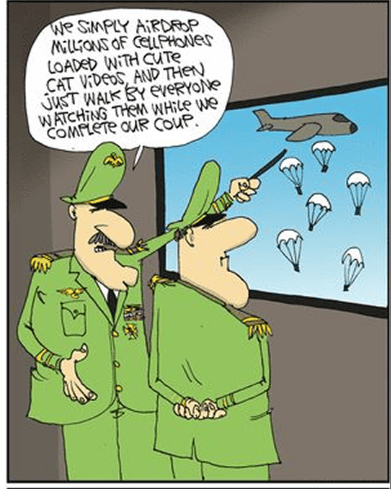
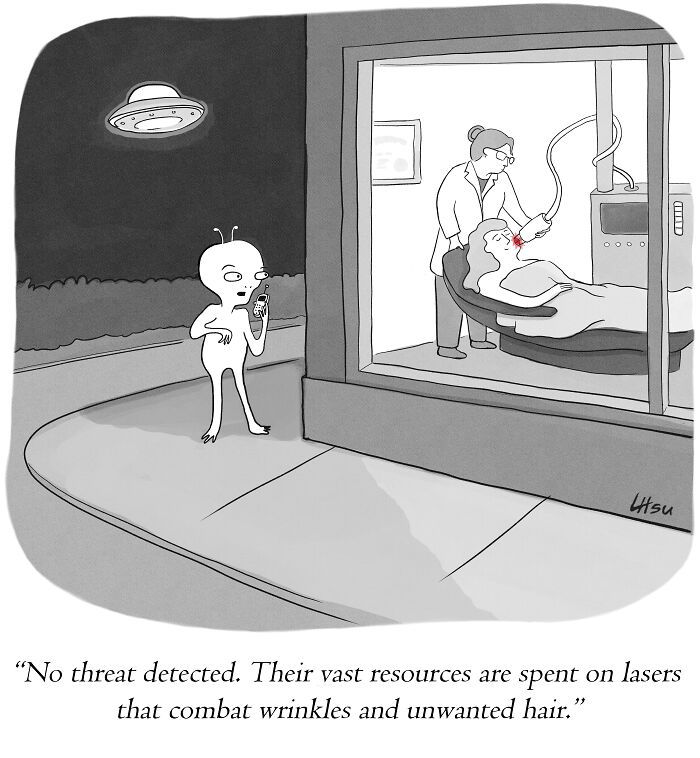
Lasers were once a huge scientific breakthrough, now we use them to play with cats.
Computers were once a huge scientific breakthrough, now we use them to look at cats.
Conclusion: Science was made for cats.


I’m in Home Depot and some little kid called me an old fart…
So, if you’re missing your kid …
he’s in the red LG dryer … aisle 17


And that’s it my friends. I hope you enjoyed it as much as I did. Until next time.